
Kindness @ El Dorado High
It was the last day of school in June for El Dorado High School and I got to be the guest in teacher Jennie Bremer’s Ethnic Studies Spring 2026 class. Just by walking into her class, I wanted to be a student in her class. In addition to this ethnic studies class, she teaches history and the classroom felt more like walking into a well-curated American History museum! She had a timeline of US history on one wall, highlighting historical figures including her personal collection of significant historical women from the Barbie special American History collection!
Virginia Reischl from the OC Department of Education connected us as Jennie had created a high impact lesson plan using my book, “The Kindness of Color.” She invited me to her class and it was easy to say yes! I got to meet the students, answer their questions and hear their thoughts and key learnings from this history!
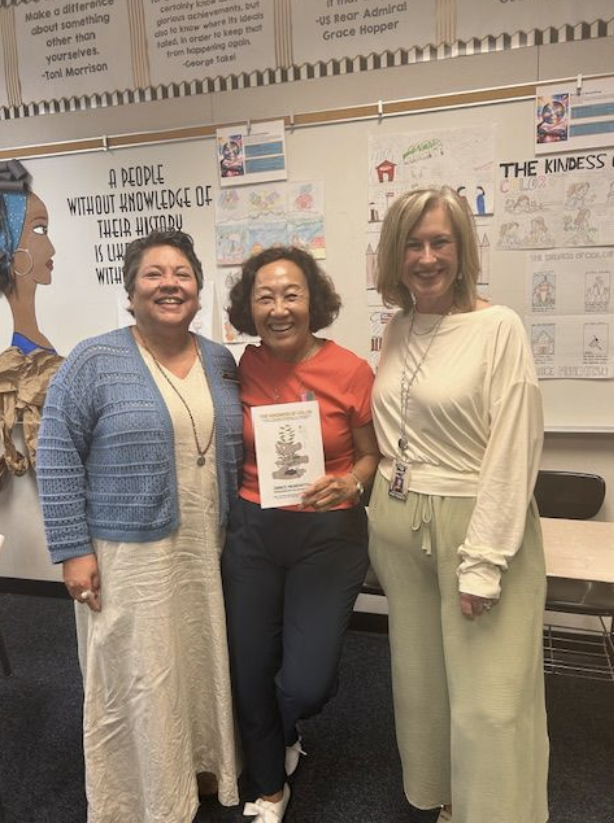
Virginia Reischl, OC Dept. of Education, connected me with teacher Jennie Bremer, and it was a treat that she was able to join us for the class!
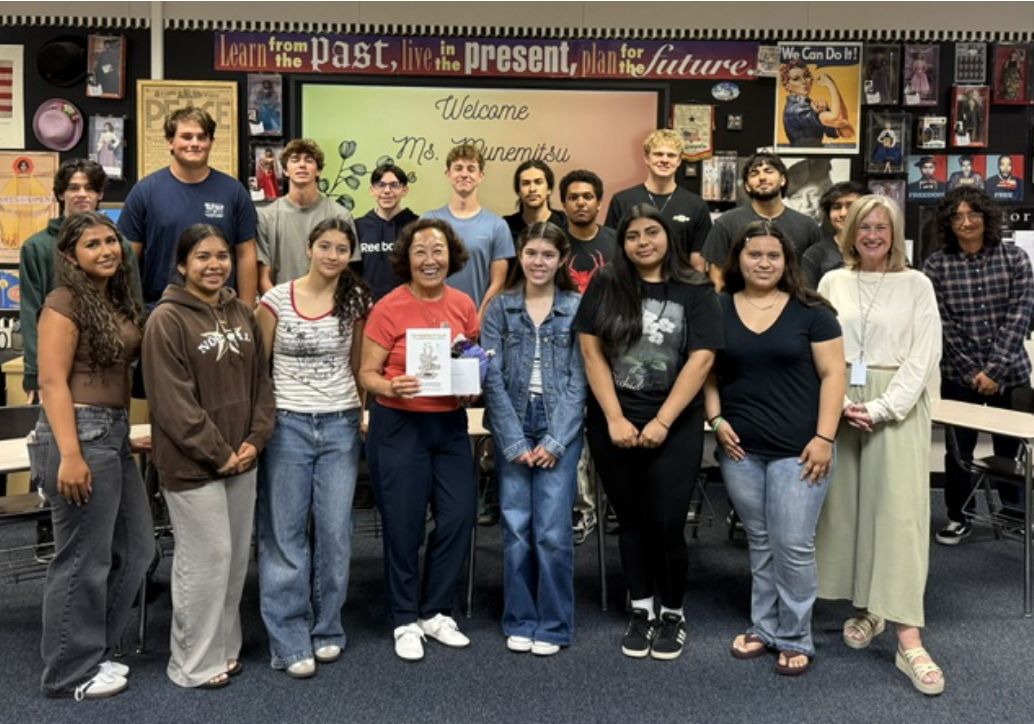
The class was made up of both Juniors and Seniors. Given it was the last day of class, during their finals class period, the Seniors had a Senior Class day at Knott’s Berry Farm! I missed meeting them, but the Juniors did an outstanding job as reps for their school and class!
The depth of the questions the students had for me was really impressive!
Their questions showed a good understanding of the history as well as great curiosity of what life in the incarceration camps would have been like and what it would have felt like to be segregated by race in school. Answering all their questions took nearly an hour! I was struck by how personally they engaged in this history and how they clearly saw the historical impact on their lives today.
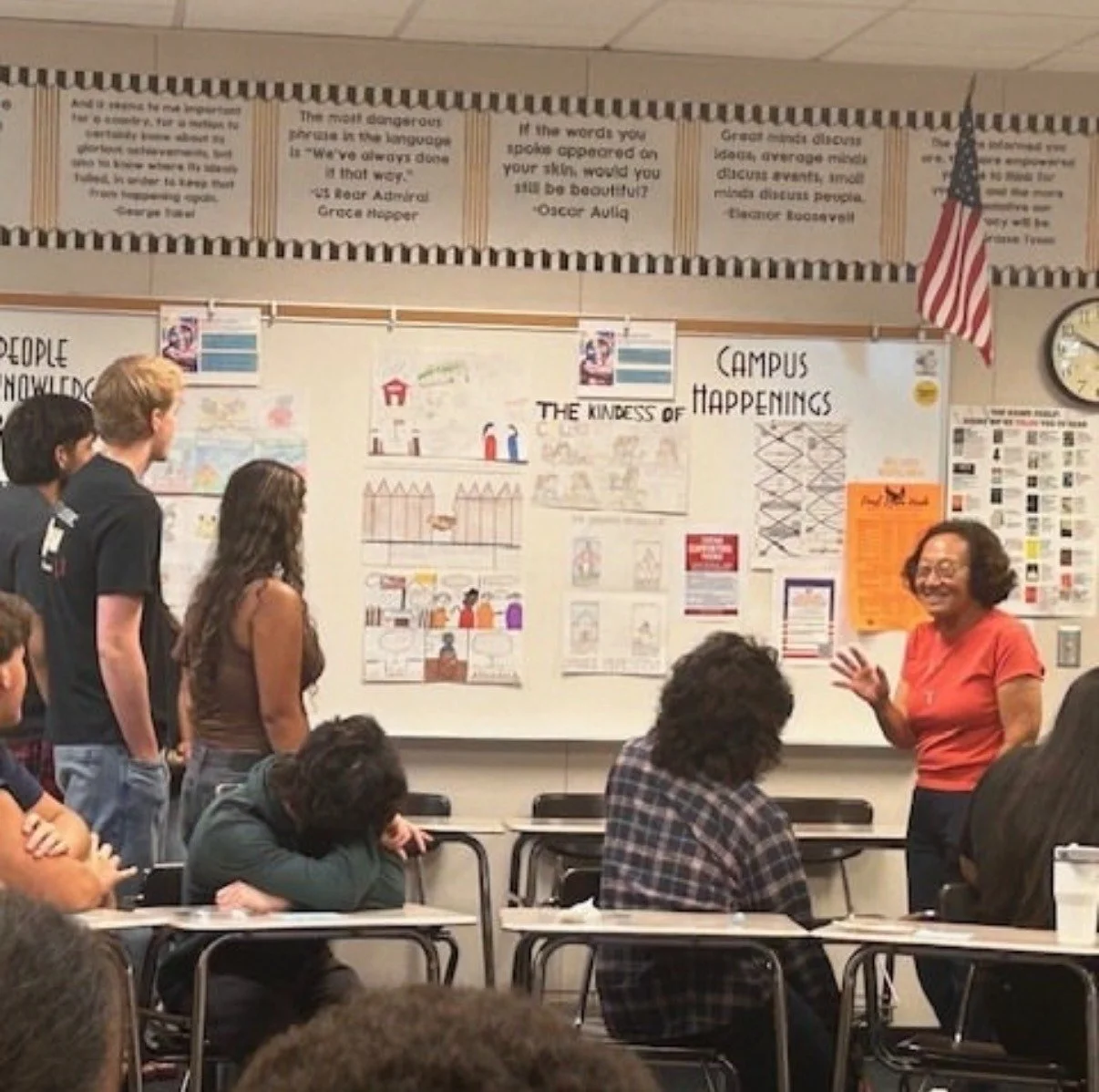
I wish we recorded the students’ presentations of their visual posters. Usually a picture is worth a thousand words, by capturing fully what the artist/writer wants to express. In this case, their posters hardly capture all the students shared as they described the lens they chose to explore and illustrate. Each student also explained why it was important to them personally and their community. Their voices held such conviction and commitment to their message about how this history is relevant to them today, eighty years later!
The assignment was to identify key moments in The Kindness of Color that connect to their assigned lens (identity, belonging, kindness, memory, or voice). Then they expressdd it in one of these ways: illustrated storyboard, symbol collage with captions, identity map (text → self → world), book quote + symbolic art, or mini graphic memoir.
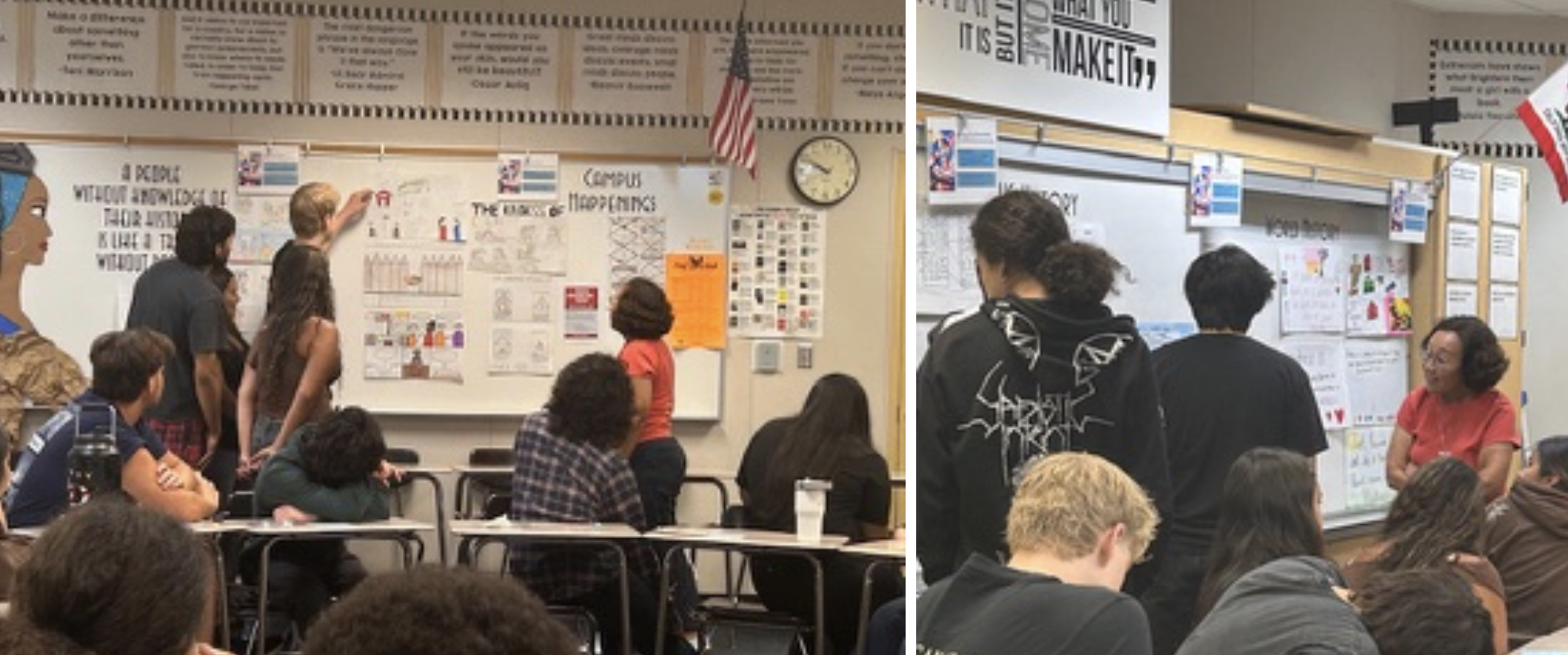
Visuals alone can’t express the passion the students had as they presented their thoughts and the impact of this history. Each one was so interesting in how they processed the history and then its relevance and meaning to them personally. I picked a few here that are representative of the class, but every one of them is a gift indeed.
With their permission, I’m sharing some of their work in this blog, but you can view all the posters with the link at the bottom of the blog.
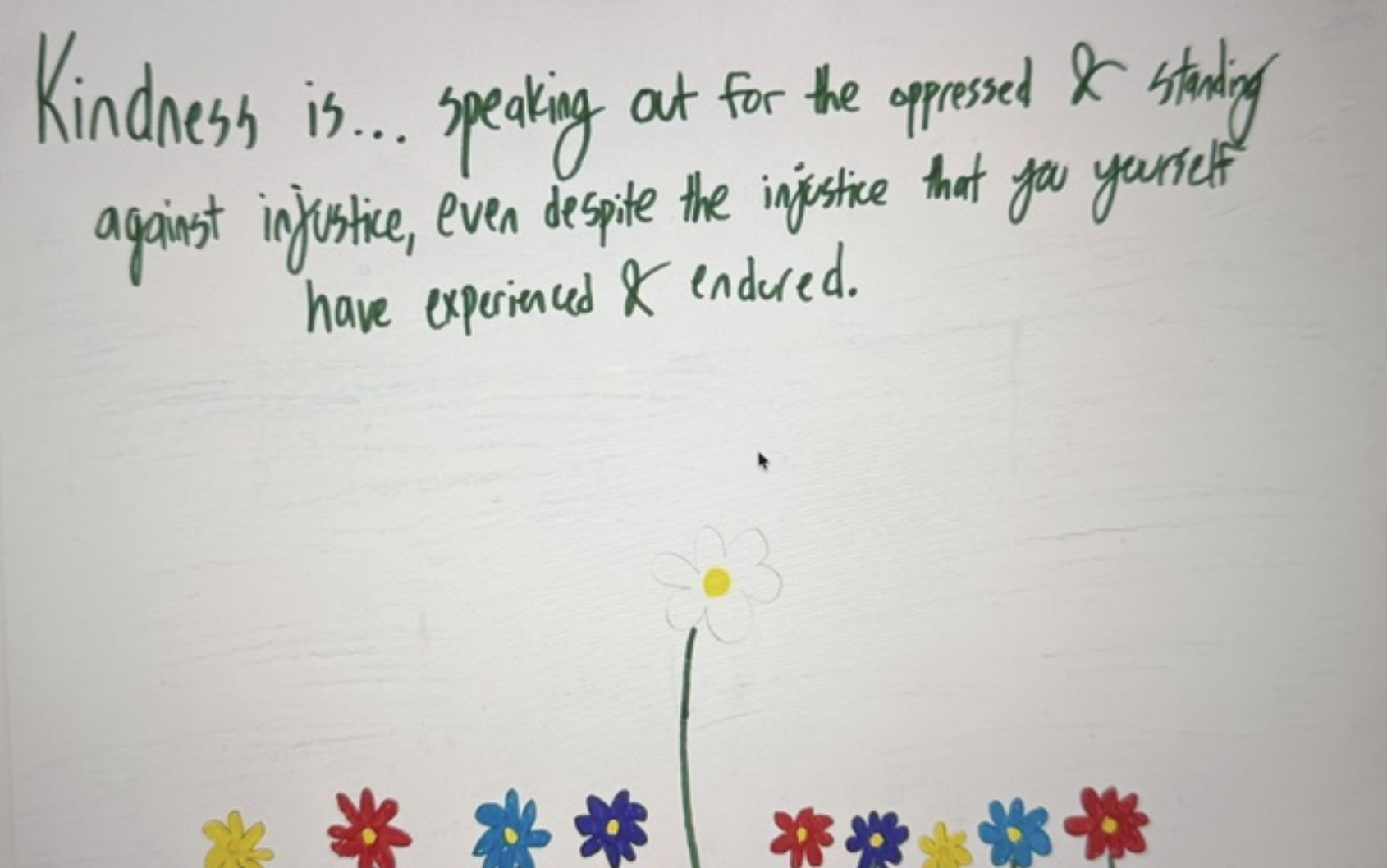
“Kindness is… speaking out for the oppressed and standing against injustice, even despite the injustice that you yourself have experienced and endured.”
At first glance, it seems like this young man just wrote a “Kindness is…” quote out of my book and drew a row of flowers to decorate the page. But as he talked about why it's important for people to stand up for those being oppressed, he said that he drew the middle flower taller because “it is speaking out for the other flowers, so that they can all bloom!” He was so confident and passionate about this that I got the definite sense that he would be one who spoke out for others…with kindness for justice.
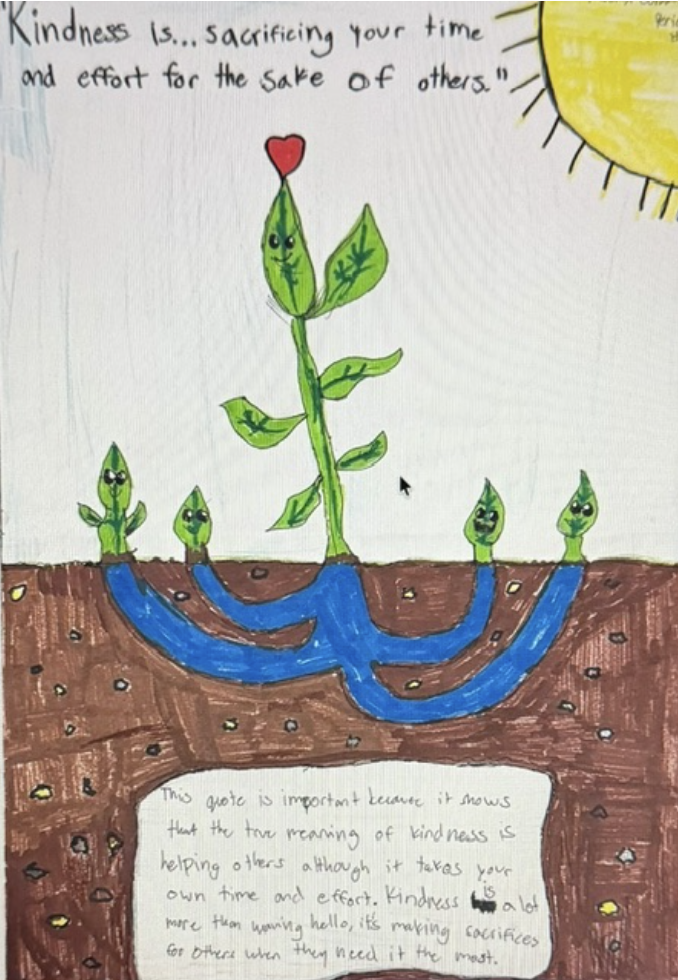
“Kindness is…sacrificing your time and effort for the sake of others.” This student went on to write: “.. the true meaning of kindness is helping others although it takes your own time and effort. Kindness is a lot more than waving hello, it’s making sacrifices for others when they need it the most.”
I wasn’t quite sure how the picture matched these wise words, until he said that the middle plant had all the water and through its roots, it is sharing its water with the other seedlings so they can all thrive! Notice the happy smiles on the young leaves!
When I saw the next two, I thought conceptually they could have been contenders for the cover of my book! Two students with similar concepts but how they described them showed their own unique hearts for equity, collaboration and partnership in community.
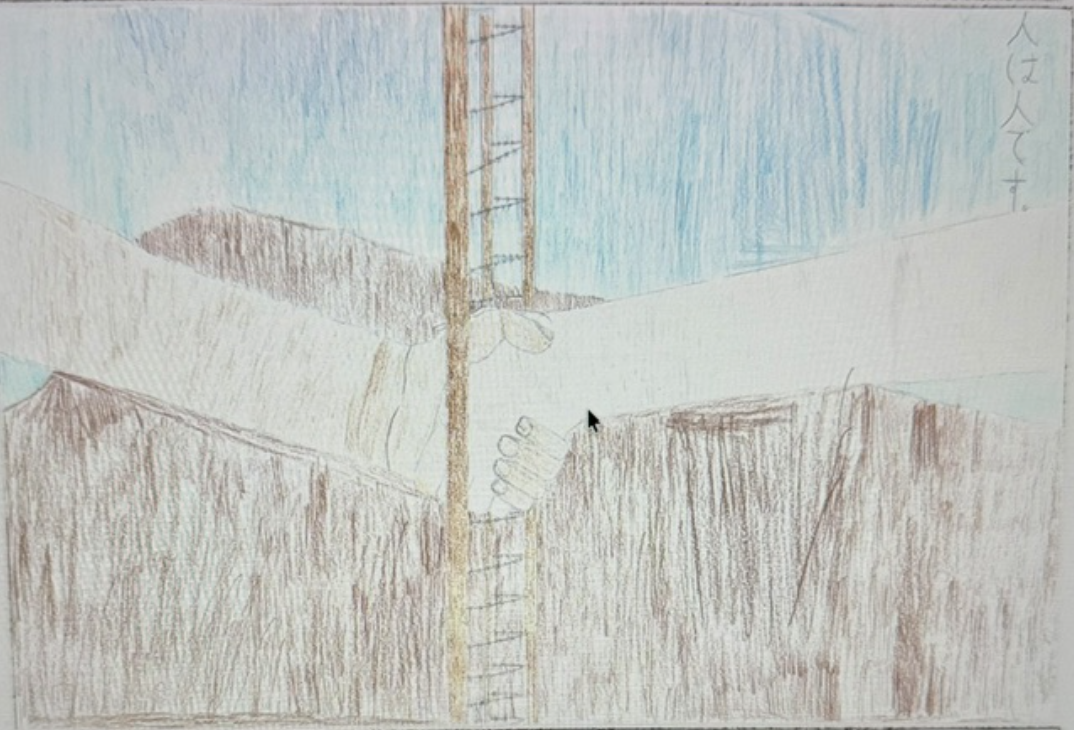
This young man drew a handshake through a barbed wire fence. In the upper right corner, he wrote in Japanese: nin wa nin desu. He confidently told me that he was learning Japanese and that this meant “people are people. We are all the same and should be treated with the same respect.”
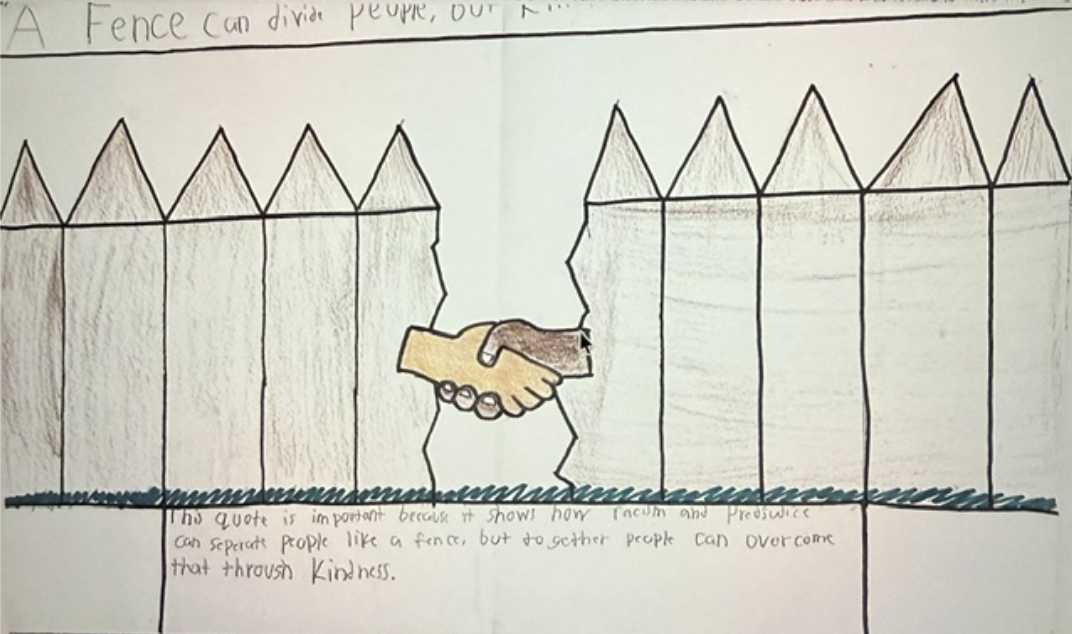
“A fence can divide people, but kindness can bring them together.” This young man also wrote: “This quote is important because it shows how racism and prejudice can separate people like a fence, but together people can overcome that through kindness.”
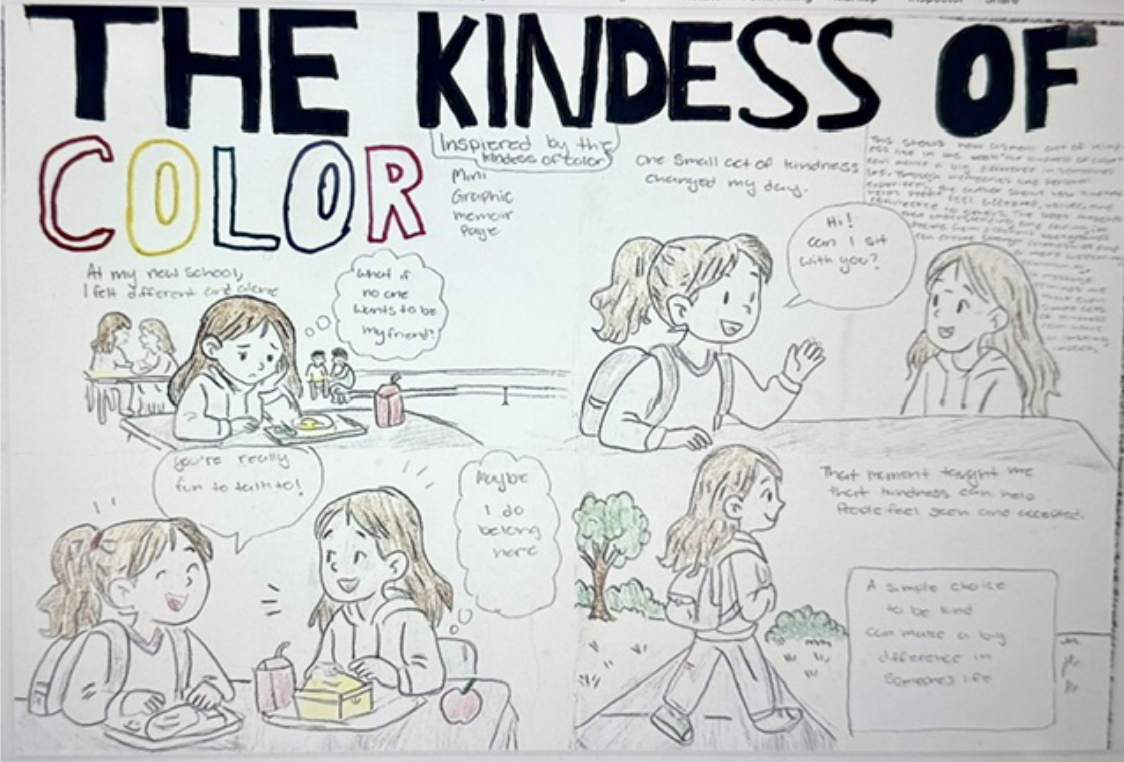
The next two young ladies expressed their thoughts in an illustrated storyboard form, creating scenarios of kindness in action. This one shows a girl reaching out to a girl who is alone and making new friends. Quite a talented young artist, indeed!
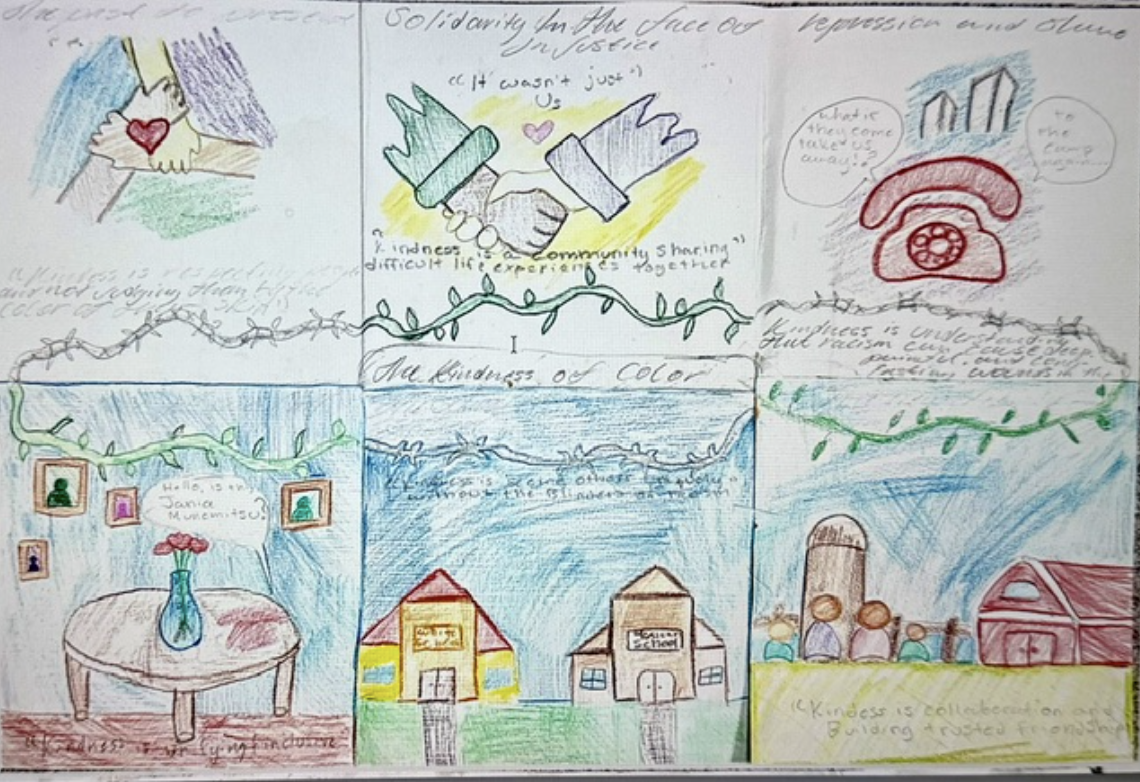
This student captured key moments in the history and wove them together with barbed wire and a plant vine as it depicted either hardships or positive connections and community. The linking of the barbed wire and plant vine is so clever, because life is just like that. I call it joy and grief intertwined!
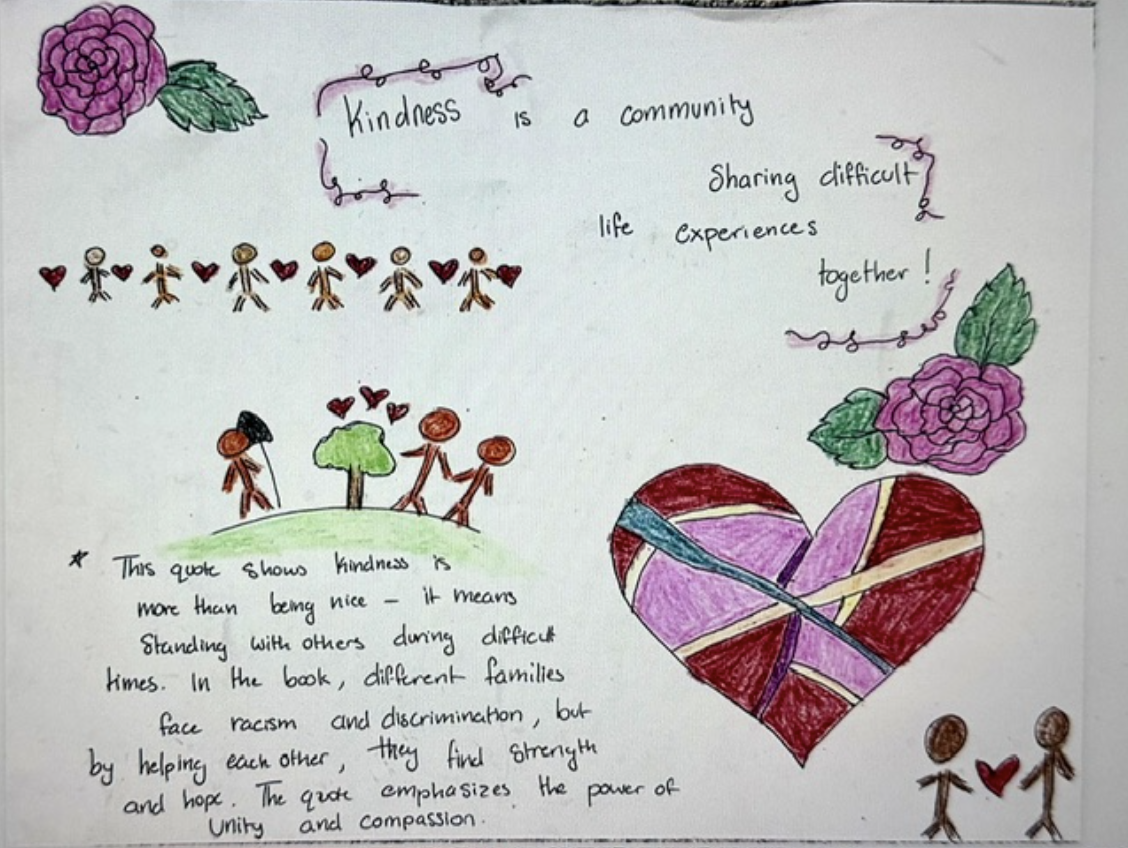
“Kindness is… a community sharing difficult experiences together.” Another student here is showing that kindness is more than being nice, but standing with others in difficult times…”but by helping each other, they find strength and hope,... the power of unity and compassion.” Lots of heart-felt compassion in this one.
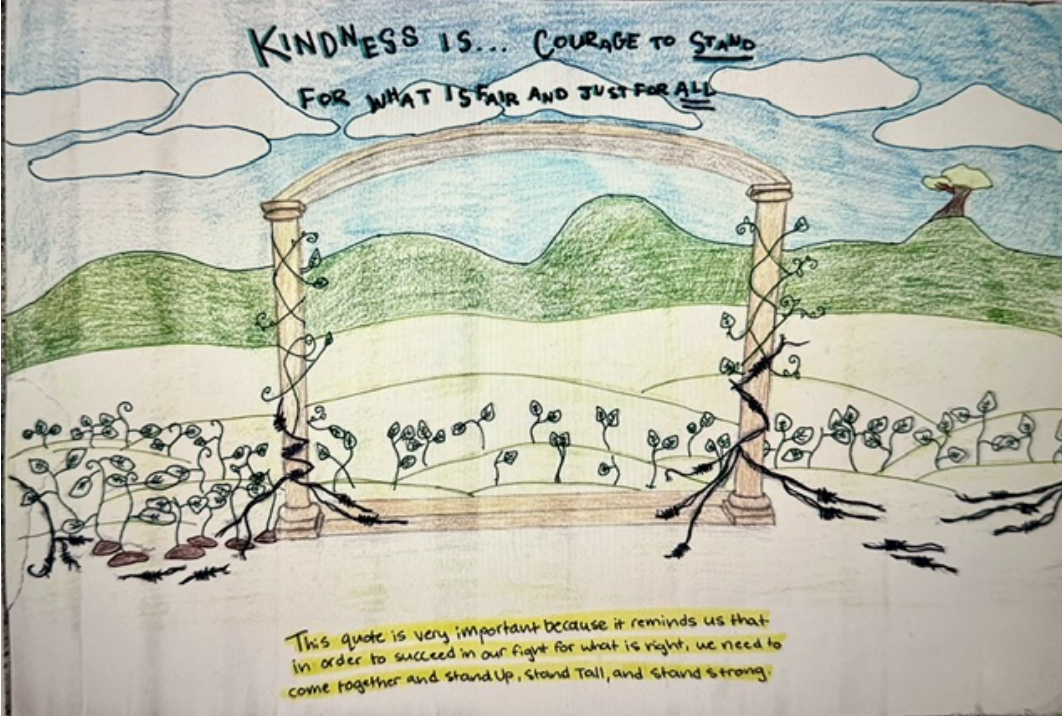
“Kindness is… courage to stand for what is fair and just for all.” This student goes on to explain: “in order to succeed in our fight for what is right, we need to come together and stand up, stand tall, and stand strong.” What might appear as a nice landscape actually shows what happens when the divisive black barbed wire is cut, and no longer stands. Everyone together, everyone stands strong.
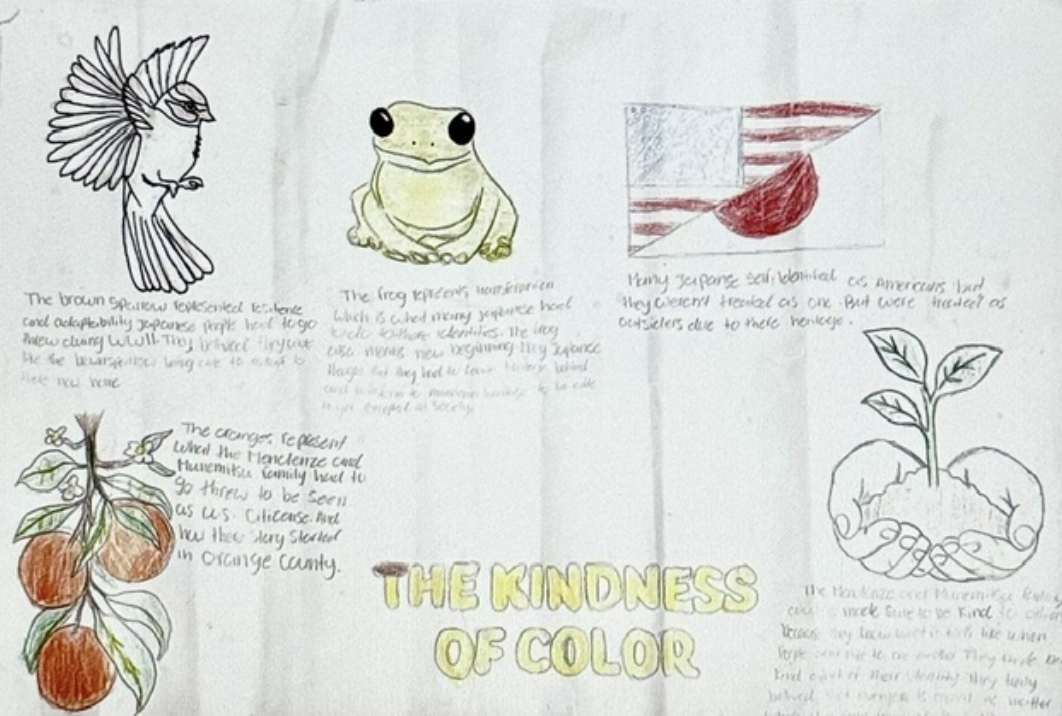
This young lady took key symbols from the book with their significant ideas. Her drawings of the sparrow and frog represents the resilience and adaptability of the Japanese American camp incarcerees; the US/Japan flags express how the Japanese American citizens felt not being accepted as Americans; the oranges represent that the families lived in OC and what they had to go through to be treated as US citizens, and the copy of the cover as two families working together to survive and thrive.
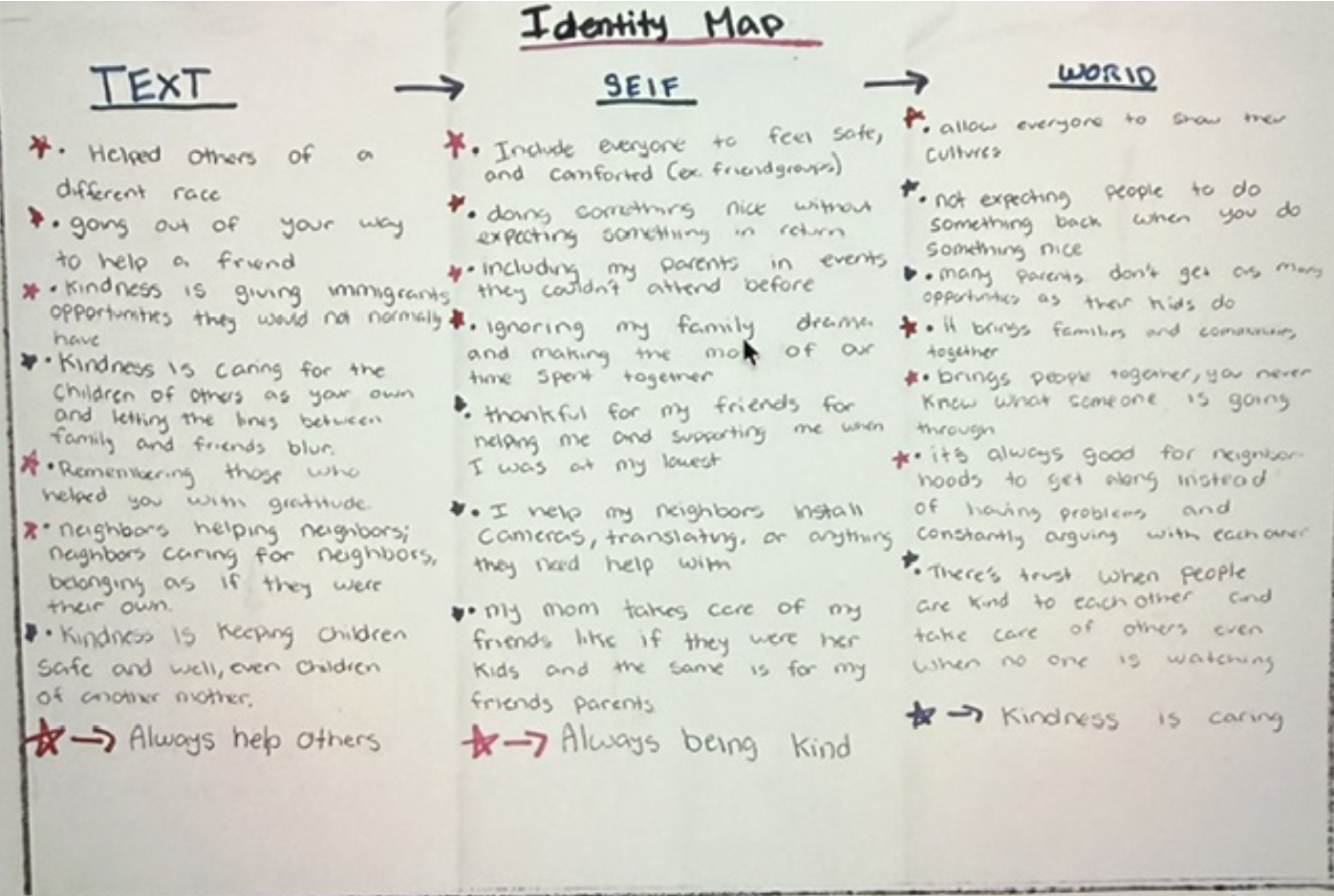
This student took key ideas from the text, how those relate personally and then to the world. The self column is truly personal and heart-felt and the application for the world quite wise!
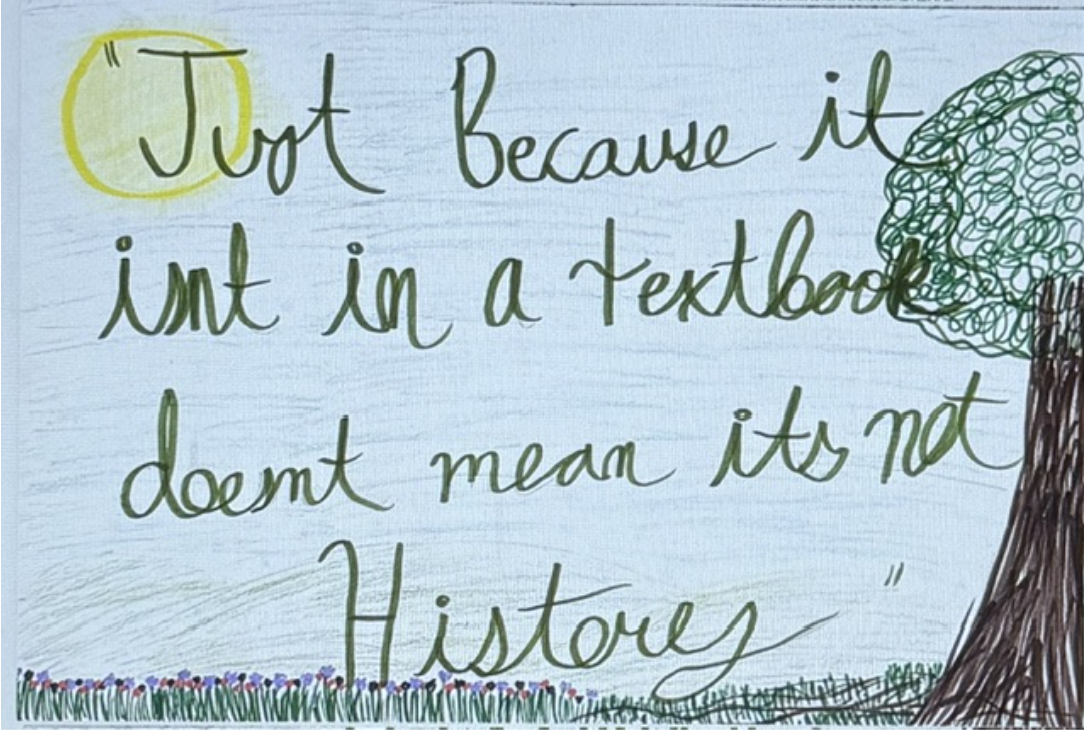
This young man was quite passionate about how textbooks may tell some of history, but not all of history, just as Mendez, et al is just now being included in history classes, and the Japanese American incarceration might only have a short paragraph without the details of the unjust withdrawal of human rights and dignity. This might look like just a quote on a page without much thought, but he also said that “only by knowing all of history can we become a better society and grow like the trees and flowers in the picture.” We need to know all of history to learn from the past and flourish like the garden he drew.
Simple, yet deep. This might just have been one assignment in their Junior year, but their deep convictions and heart-felt presentations were much, much more. In so many ways, these students expressed their hope for the schools, neighborhoods, and communities they want now and for the future.
Above the bulletin board in the classroom are these words that summarize this classroom experience for me.
Learn from the past, Live in the Present, and Plan for the Future.
And may I add, do it all with KINDNESS!
So grateful for Jennie Bremer and the Spring 2026 Ethnic Studies Class! Thank you for your hard work and for sharing it all with me. I’m inspired by your words and projects and as I continue to learn from you too!
Click here for Jennie Bremer’s Lesson Plan and all the students’ projects.
Both can be found under Resources on my website.

In the Press

Follow us on Facebook, Instagram & LinkedIn as we cultivate kindness together